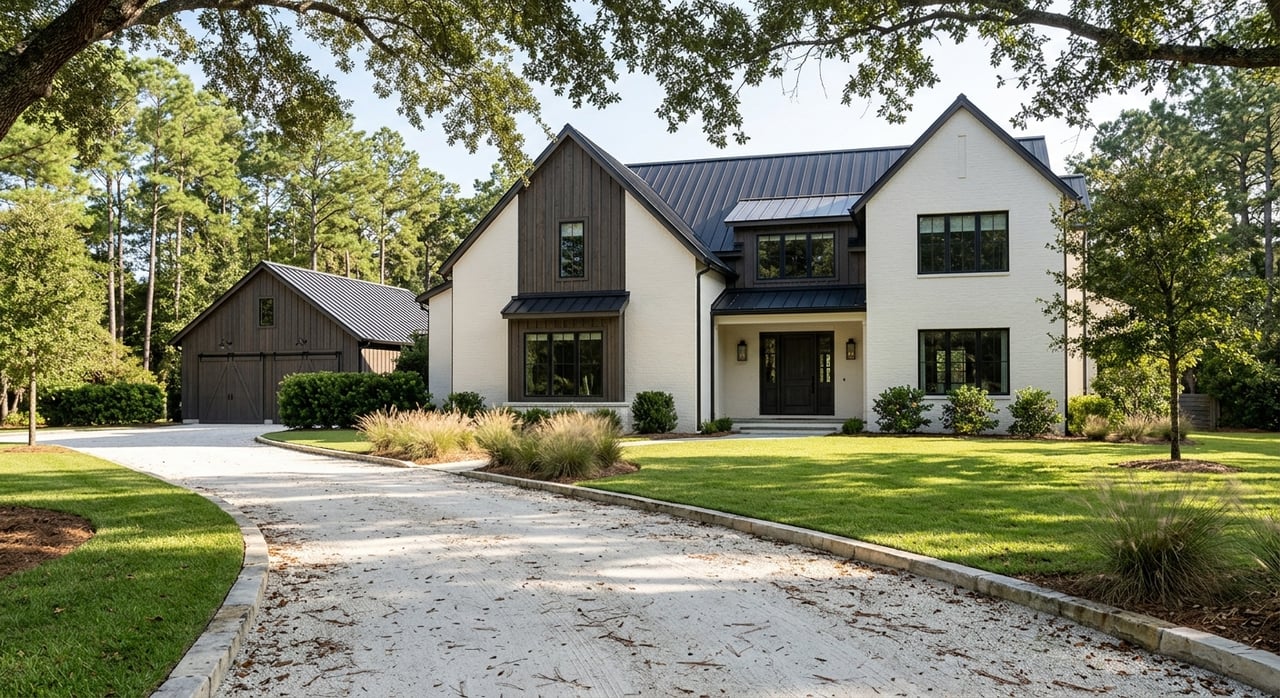
Looking for more land without giving up daily convenience? That is exactly why so many buyers are taking a closer look at Magnolia’s acreage communities and country estates. If you want more privacy, room to spread out, and a home that fits the way you actually live, Magnolia offers a wide range of options. Let’s dive in.
Why Magnolia draws acreage buyers
Magnolia offers something many growing Houston-area buyers want but cannot always find in denser suburban neighborhoods: space with access. City materials describe the area as a place where you can find conventional subdivisions, farm-and-ranch living, and custom homes on sprawling acreage.
That variety matters because acreage in Magnolia is not one-size-fits-all. You can find wooded homesites around a half acre, one-acre-plus custom communities, and larger country estates stretching from 2 to 10 acres or more.
Magnolia also continues to grow. The city reports a 2024 population of 5,836 and notes a 147.4% population increase from 2020 to 2024, which helps explain why land, custom-home opportunities, and flexible lifestyle options remain such an important part of the local housing conversation.
What acreage living looks like
Acreage living in Magnolia usually starts with one key idea: more usable outdoor space. For some buyers, that means room for a pool, garden, workshop, or oversized patio. For others, it means wooded privacy, scenic drives, or a property that feels more removed from the pace of a typical subdivision.
The city specifically highlights Magnolia’s appeal for equestrians, cyclists, golfers, and nature lovers. Community features across the area support that lifestyle with trails, lakes, ponds, and preserved natural settings.
Just as important, many of these neighborhoods are designed to feel rural without feeling cut off. Magnolia is often described as a bedroom community with access to Houston, Conroe, and The Woodlands, which makes it appealing if you want breathing room but still need practical day-to-day access.
Magnolia acreage options by lot size
The local market works best when you think of it as a spectrum rather than a single category. Different communities cater to different priorities, budgets, and home styles.
Half-acre wooded homesites
If you want more elbow room without stepping into full estate-scale property, half-acre communities can be a strong middle ground. Magnolia Reserve markets wooded half-acre homesites and highlights features such as one-story plans, 3-car garages, and outdoor kitchens.
This type of option often appeals to buyers who want a little more privacy and outdoor space while still preferring a more neighborhood-oriented setting. It can be a practical entry point into Magnolia’s acreage lifestyle.
One-acre-plus custom communities
For many luxury and upper-midmarket buyers, the sweet spot is a one-acre-plus custom-home neighborhood. High Meadow Estates and High Meadow West both market one-acre-plus homesites with all-custom homes and structured architectural standards.
These communities reflect a more curated version of acreage living. High Meadow Estates advertises a 3,000-square-foot minimum, masonry and garage-orientation rules, underground utilities, and no MUD tax, along with amenities like a resort-style pool, tennis and pickleball courts, a playground, walking trails, and a community lake.
High Meadow West follows a similar pattern with one-acre-plus homesites, custom homes, a 3,200-square-foot minimum, controlled architectural styles, a 95-foot minimum width requirement, no MUD tax, and POA dues. If you want a polished custom-home environment with estate spacing, these are the kinds of details worth comparing closely.
Larger country estates
If your goal is a more expansive homesite, Magnolia also has communities built around multi-acre living. Sendera Ranch offers 1- to 5-plus-acre lots with bridle trails, while Estates of Clear Creek says most properties span 2 to 10 acres.
These larger properties often appeal to buyers who want a stronger sense of separation, more flexibility for outdoor use, or a more rural atmosphere. They can also come with more due diligence, especially around utilities, restrictions, and long-term maintenance.
Nature-focused acreage settings
Some communities blend estate-style homesites with a stronger emphasis on recreation and scenery. The Preserve, about 2 miles west of Magnolia, offers one-plus-acre homesites on an 80-acre tract with a nature preserve, trails, and a playground.
Indigo Lake Estates adds another distinctive option. Its POA describes custom homes on acreage homesites with a private lake, beach area, parks, sports fields, a covered basketball pavilion, and about 6 miles of nature and equestrian trails.
What buyers should compare carefully
A beautiful lot is only part of the picture. In Magnolia, acreage properties can differ a lot from one tract to the next, so careful comparison is essential.
Deed restrictions and POA rules
One of the biggest mistakes buyers make is assuming all acreage properties allow the same uses. In reality, many Magnolia communities have deed restrictions or POA rules that can shape what you can build, how homes must look, and what kinds of exterior improvements are allowed.
Depending on the neighborhood, you may find standards for minimum home size, garage orientation, architectural style, gated access, or trail-use guidelines. If fencing, outbuildings, or animal-related uses matter to you, it is smart to verify the recorded restrictions for the exact property instead of relying on a general assumption.
Utility setup
Utilities are a major due-diligence item for rural-feeling homesites. Some properties may have different utility arrangements than a typical suburban subdivision, so you want clarity early in the process.
For septic systems, the Texas Commission on Environmental Quality says an on-site sewage facility must be based on a site evaluation by a licensed site evaluator or professional engineer before it can be built, installed, altered, or repaired. TCEQ also recommends pumping a septic tank every three to five years.
For private wells, TCEQ says owners are responsible for regular water testing and recommends using accredited labs. If you are considering a property with well and septic service, these systems should be part of your home search questions from day one.
Tax structure
Taxes are another key part of evaluating acreage homes. Magnolia’s published 2025 ad valorem rates are $0.3790 for Montgomery County, $0.9595 for Magnolia ISD, $0.2509 for the City of Magnolia, $0.0497 for the hospital district, $0.1076 for Lone Star College, and $0.0873 for ESD 10.
Together, that totals $1.834 per $100 of assessed value before exemptions for a property subject to all of those taxing units. At the same time, some acreage communities advertise no MUD tax, which is one reason buyers often compare neighborhood tax structures very closely.
Attendance-zone confirmation
If school assignment is part of your planning, parcel-level verification matters. Magnolia ISD notes that some street segments near boundaries may appear in or out of the district because of boundary scaling and directs users to MCAD for address-level confirmation.
That is especially important in a market where lot sizes, subdivision layouts, and boundary edges can vary. It is always better to confirm the exact property rather than assume based on a general map view.
Commute and access matter more than you think
Acreage buyers often focus first on the land, then realize the road network is just as important. In Magnolia, FM 1488, FM 1774, and SH 249 play a big role in day-to-day travel patterns.
The city says roadway widening on FM 1488 and FM 1774 is part of the area’s ongoing growth. The City of Magnolia said in April 2025 that the FM 1488 widening project was expected to finish in August 2026, and TxDOT says SH 249’s open segment runs from FM 1774 in Pinehurst to FM 1488 near Magnolia.
For buyers, the takeaway is simple: access can improve over time, but construction can also affect your routine in the meantime. During your search, it helps to evaluate not just the map but also how a route feels at the times you will actually use it.
How to narrow the right acreage fit
The best acreage property is usually the one that matches your day-to-day priorities, not just your wish list. A half-acre wooded homesite, a one-acre custom estate, and a 5-acre country property can all deliver a very different ownership experience.
As you compare options in Magnolia, focus on a few core questions:
- How much land do you realistically want to maintain?
- What level of privacy matters most to you?
- Do you want a custom-home community with tighter standards or a more rural estate setting?
- What utility setup does the property use?
- Which taxing units apply?
- How will your regular commute and errands work during current road projects?
- What do the deed restrictions allow for the way you want to use the property?
When you answer those questions early, the search usually becomes much clearer. You can spend less time chasing the idea of acreage and more time finding the version of it that actually supports your lifestyle.
If you are exploring Magnolia’s acreage communities or preparing to buy or sell a custom or country-estate property, working with a local expert can make the process far more efficient. Melissa King offers hands-on guidance for buyers, sellers, and relocation clients across Magnolia and the north Houston corridor, with a thoughtful, strategy-first approach tailored to properties where details matter.
FAQs
What lot sizes are common in Magnolia acreage communities?
- Magnolia acreage properties range from about half-acre wooded homesites to one-acre-plus custom lots and larger country estates of 2 to 10 acres or more, depending on the community.
What should buyers verify before purchasing a Magnolia country estate?
- Buyers should verify deed restrictions, POA rules, utility setup, tax structure, and commute routes, since these can vary significantly by neighborhood and parcel.
What utility issues matter for Magnolia acreage homes?
- Well and septic details are important due-diligence items, and properties with these systems may require water testing, site evaluations, and ongoing maintenance.
What roads are most important for Magnolia commutes?
- FM 1488, FM 1774, and SH 249 are key routes for many Magnolia residents, and current or future road projects can affect daily travel times.
Why do some Magnolia acreage buyers compare taxes so closely?
- Tax rates can add up across multiple taxing units, and some communities also market no MUD tax, so buyers often compare the full tax picture before choosing a property.