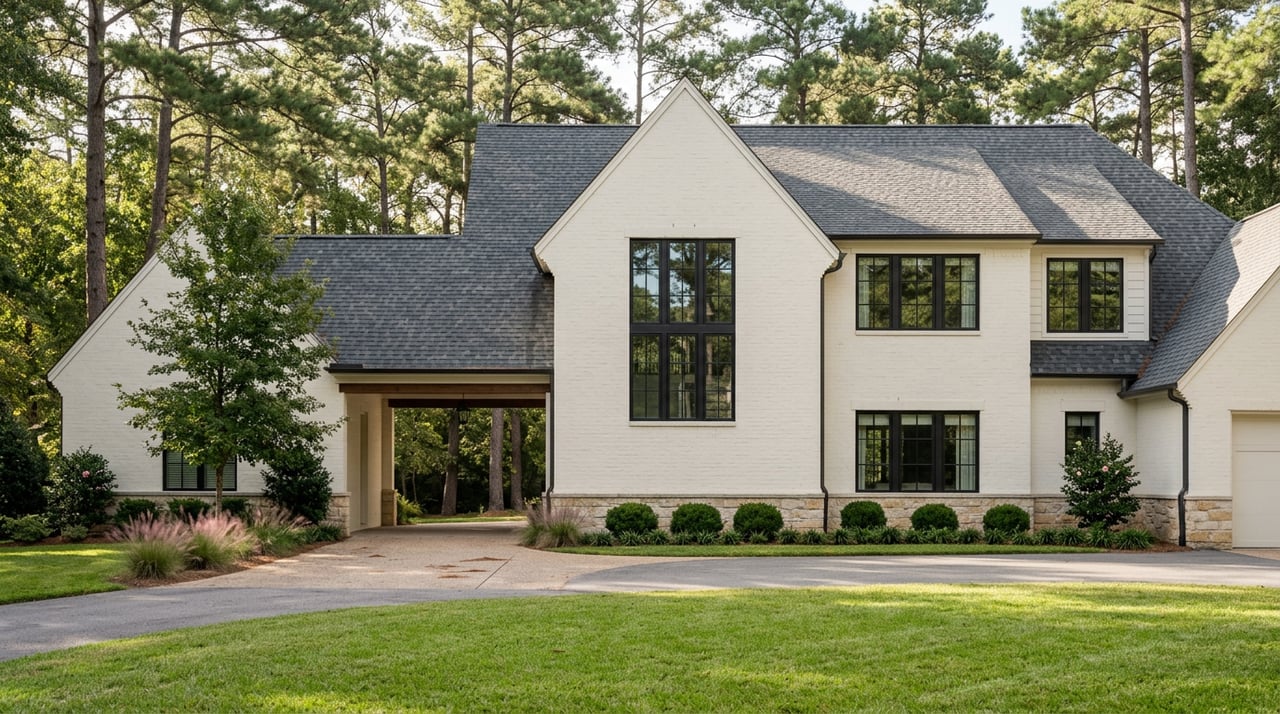
Ask why Magnolia's new-construction inventory looks different this year than it did in 2023, and most explanations will point to growth. FM 1488 traffic, rooftops multiplying along Highway 249, another master-planned community breaking ground. All true. Water was another important factor: it remained a constraint until this past December, after three years.
From late December 2022 until December 14, 2025, the City of Magnolia operated under a temporary development moratorium that froze new water and sewer connections inside city limits and its extraterritorial jurisdiction. The city's own moratorium updates page confirms the freeze officially expired that day, and builders can now apply for new connections through the city's utility department. For anyone comparing Magnolia's home prices to Tomball's or The Woodlands's over the past three years, that single fact changes how much weight the comparison deserves.
How the moratorium affected new construction
The moratorium existed because Magnolia's water system had run out of room. The original ordinance, adopted in a special council session in December 2022, stated plainly that the city's water facilities were at capacity and "inadequate and insufficient to adequately serve new development," according to reporting at the time from ABC13. City Engineer Mike Kurzy told Community Impact in early 2023 that Magnolia had about 3,658 water connections at the time and none available to hand out, with roughly 11,000 new connections expected to be needed over the following five years as development kept arriving.
That gap between demand and capacity is the part a median price never shows. During 2023 and 2024, the connection limit was extended repeatedly as the city worked to increase capacity.
What actually kept moving during three dry years
The freeze didn't touch every kind of property the same way, and that distinction matters more than the freeze itself if you're deciding where to buy now.
| Property type | During the freeze (Dec 2022–Dec 2025) | Now |
|---|---|---|
| Resale home already connected to city water | Traded and closed normally, tap already existed | No change |
| Acreage home on private well and septic | Never touched by the ordinance, these systems don't run through a city tap | Still the default for most acreage outside city limits |
| New-construction lot needing a first-time city tap | Waitlisted or rationed as new wells came online | Applications reopened, subject to available capacity |
| Master-planned community running its own private well or plant | Kept building on self-funded infrastructure while the city queue stayed frozen | Now has a private system in place, with city capacity as a future option |
Magnolia's wooded acreage properties on septic and well, the kind of large-lot homes this corridor is known for, were largely insulated from all of this. The freeze was a city-water problem, not a groundwater problem. That's worth sitting with, because it means three years of scarcity pricing in Magnolia's new subdivisions tells you very little about whether an acreage property in the same zip code was actually scarce.
The price tag on staying open
Some developers didn't wait for the city. Sam Yager III, who develops the Audubon community in Magnolia, told Community Impact that Audubon completed its own water well in the summer of 2023 specifically because the city couldn't provide connections. Yager said the well cost around $1.5 million to build, and expanding it into a full water plant brought the total closer to $3 million, in a project Community Impact detailed in April 2024. Without it, he said, the community would have fallen behind on commitments to its builders.
Other developers worked a different angle. Parkside Capital, building out a mixed commercial and build-to-rent tract in the same growth corridor, extended its own water and sewer lines with the city's cooperation, according to the same reporting. Parkside Capital President Brett Walker said the city had been reasonable in letting the company extend those lines, with the only remaining step being a future tie-in to the capacity the city was still constructing. On the public side, the Magnolia Economic Development Corporation put nearly a million dollars into a temporary water system in the early months of the moratorium to help keep commercial projects near Magnolia Place and Magnolia Village from stalling completely, a project first announced in late 2022 and later confirmed by Community Impact's May 2025 coverage of the roughly $1 million the MEDC ultimately invested.
None of that spending was invisible to buyers. The city had already raised its impact fee to $7,400 per single-family connection in May 2022, right before the freeze began.
Why October turned into December
By spring of 2024, two new wells, numbers 7 and 8, had come online at a combined cost of about $7.73 million, unlocking 2,833 new connections according to Community Impact's reporting that April. Mayor Matthew "Doc" Dantzer told the paper in May 2025 that the city's key performance indicators pointed to being "in the clear" by October, with total infrastructure investment approaching $30.2 million across new wells, storage tanks, and booster pumps. By that point, City Engineer Tim Robertson was the one explaining the underlying constraint to reporters: Texas Commission on Environmental Quality rules dictate the infrastructure capacity a city must have on hand to serve its number of connections, and Magnolia had bumped up against that ceiling.
October came and went without a lift. The moratorium didn't officially end until December 14, two months past the mayor's projection, based on the Community Impact article. The two-month difference is worth noting when considering timelines for projects tied to utility capacity.
Rachel Steele, executive director of the Magnolia Economic Development Corporation, framed the lifting less as a finish line and more as a checkpoint. "Just because the moratorium is lifting doesn't mean we stop planning and putting safeguards in place so that we don't repeat what we experienced," she told Community Impact in May 2025. Cody Miller, director of government affairs for the Greater Houston Builders Association, described the other side of that coin, telling the same publication that lifting the freeze creates opportunity "not just for builders, but for tradespeople, lenders, realtors" and that the whole industry "re-engages" once new connections open back up.
What this means if you're cross-shopping suburbs
Tomball and The Woodlands never went through anything like this. The Woodlands, for one, gets its water and sewer service through eleven separate Municipal Utility Districts coordinated by the Woodlands Joint Powers Agency rather than a single city utility department, which spreads capacity planning across multiple smaller systems instead of concentrating it in one. That's a structural difference, not a judgment on either approach, but it means the last three years of new-construction pricing in Magnolia and in a MUD-served suburb like The Woodlands were shaped by two different sets of constraints. Magnolia's constraint was regulatory and physical, tied to one city's well capacity. It rationed how many new taps could be issued, full stop, regardless of how many buyers wanted them.
With that constraint lifted as of mid-December 2025, new-construction supply in Magnolia has room to expand in a way it hasn't in three years. Whether that translates into more negotiating room for buyers over the coming months is something worth watching rather than assuming, since builder pipelines, lot availability, and the pace at which the city actually approves new tap applications will all shape how quickly that supply shows up. What's already clear is that any straight price comparison between a new Magnolia build and a comparable new build in a suburb that never had a moratorium was comparing a rationed market to an open one.
The questions worth asking before you write an offer
If you're looking at new construction in Magnolia specifically, three questions do more work than any spec sheet.
- Is this lot's water tap already secured, or is it in the queue for a new connection? A secured tap on an existing subdivision phase is a very different situation from a lot that still needs a fresh connection application.
- Is this community on city water, or does it run on a private well or plant like Audubon's? Both are workable, but they're different systems with different long-term maintenance and cost structures, and it's a fair question to ask the builder or HOA directly.
- Is the $7,400 city impact fee already built into the price you're being quoted, or is it an add-on you'll see at closing?
None of these questions apply to a resale home already tied into the system, and none of them apply to acreage on private well and septic, which is why the property type you're considering matters as much as the neighborhood name on the listing.
A few things buyers ask directly
Does the moratorium affect homes that are already built and connected to city water? No. The freeze applied to new connections and new development approvals. Existing homes with existing taps traded and closed throughout the entire period.
Does any of this apply to acreage properties on well and septic? Generally no. The moratorium governed the city's water and sewer system specifically. Acreage properties running on private well and septic operate outside that system entirely, which is exactly why they were unaffected while subdivision construction was rationed.
Is Magnolia's water considered a long-term concern for buyers now? As the infrastructure work was wrapping up in 2025, the city's own benchmark was combined well capacity exceeding 5,500 gallons per minute, enough to support an estimated 9,200 customers, according to Community Impact's May 2025 reporting. That figure was the city's stated target for building ahead of demand rather than behind it, and it's a reasonable number to ask a builder or the city's utility department to confirm against current usage before you buy.
Comparing suburbs on price alone was never the full picture, and Magnolia's last three years are a clear example of why. If you're weighing Magnolia against Tomball, The Woodlands, or another north Houston suburb and want help reading what a specific listing's water and utility situation actually means for your offer, Melissa King offers a complimentary home strategy call to walk through it property by property.
This article is general information, not legal, tax or financial advice. Consult a qualified professional about your situation.